News & Updates from MJM Manufacturing

MJM News

Equipment investments, certifications, milestones, and updates from Miami’s premier precision sheet metal fabrication facility.

5205 NW 161 Street, Miami, FL 33014  |  (305) 620-2020  |  sales@mjmmfg.com  |  AS9100 Certified  |  ITAR Registered  |  DBE Certified
Design & Sourcing · July 2026

Sheet Metal Design for Manufacturability: 7 Ways to Reduce Cost Before You Send an RFQ

After 47 years of fabricating precision sheet metal parts, we see the same handful of design decisions quietly drive up cost, stretch lead times, and trigger avoidable revisions. The good news: almost all of them are easy to fix before a drawing ever reaches a supplier.

This is a practical, floor-level look at the most common issues we catch during design for manufacturability (DFM) review — and how engineers, buyers, and OEMs can address them up front to get faster quotes and better parts.

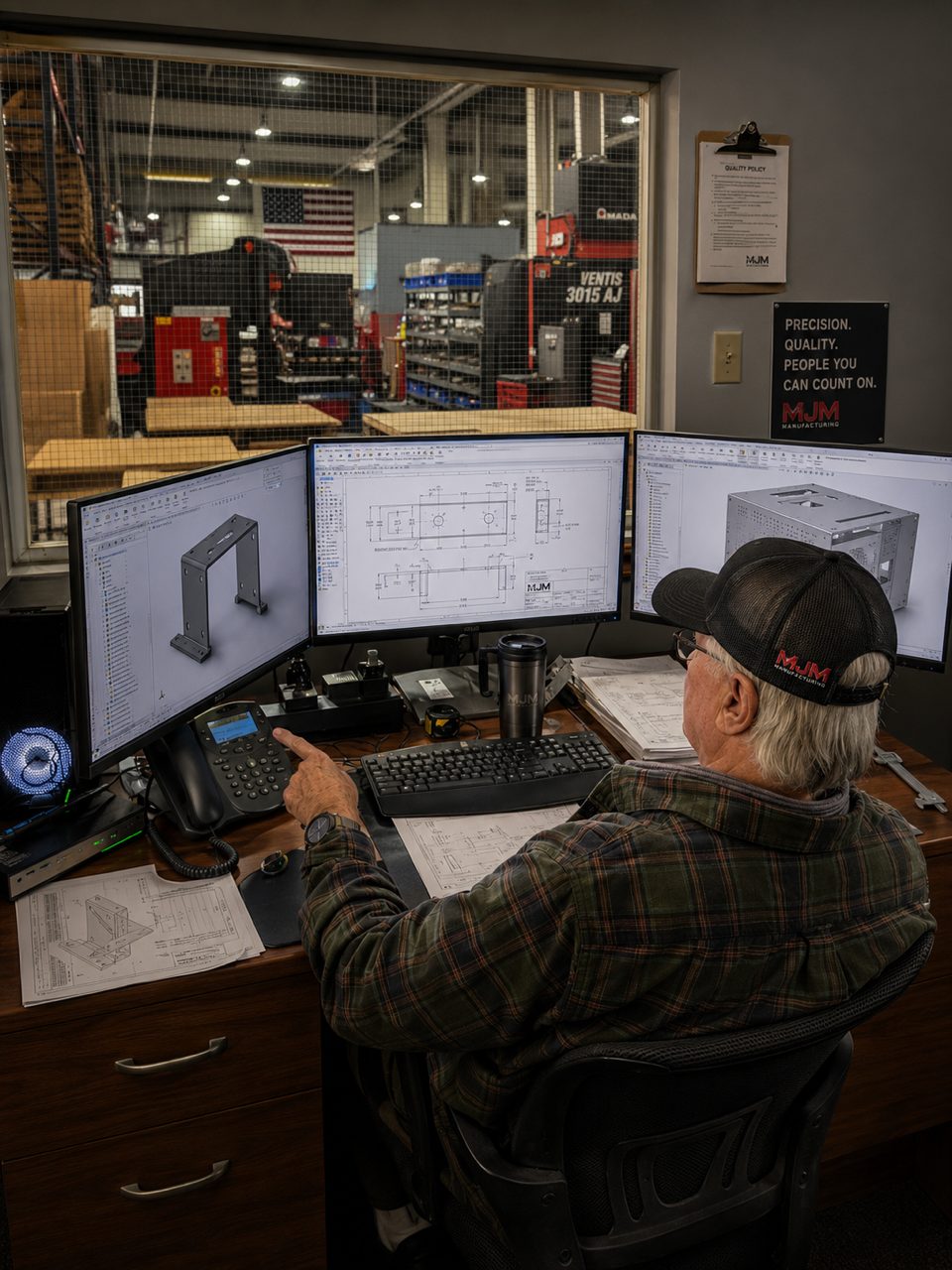
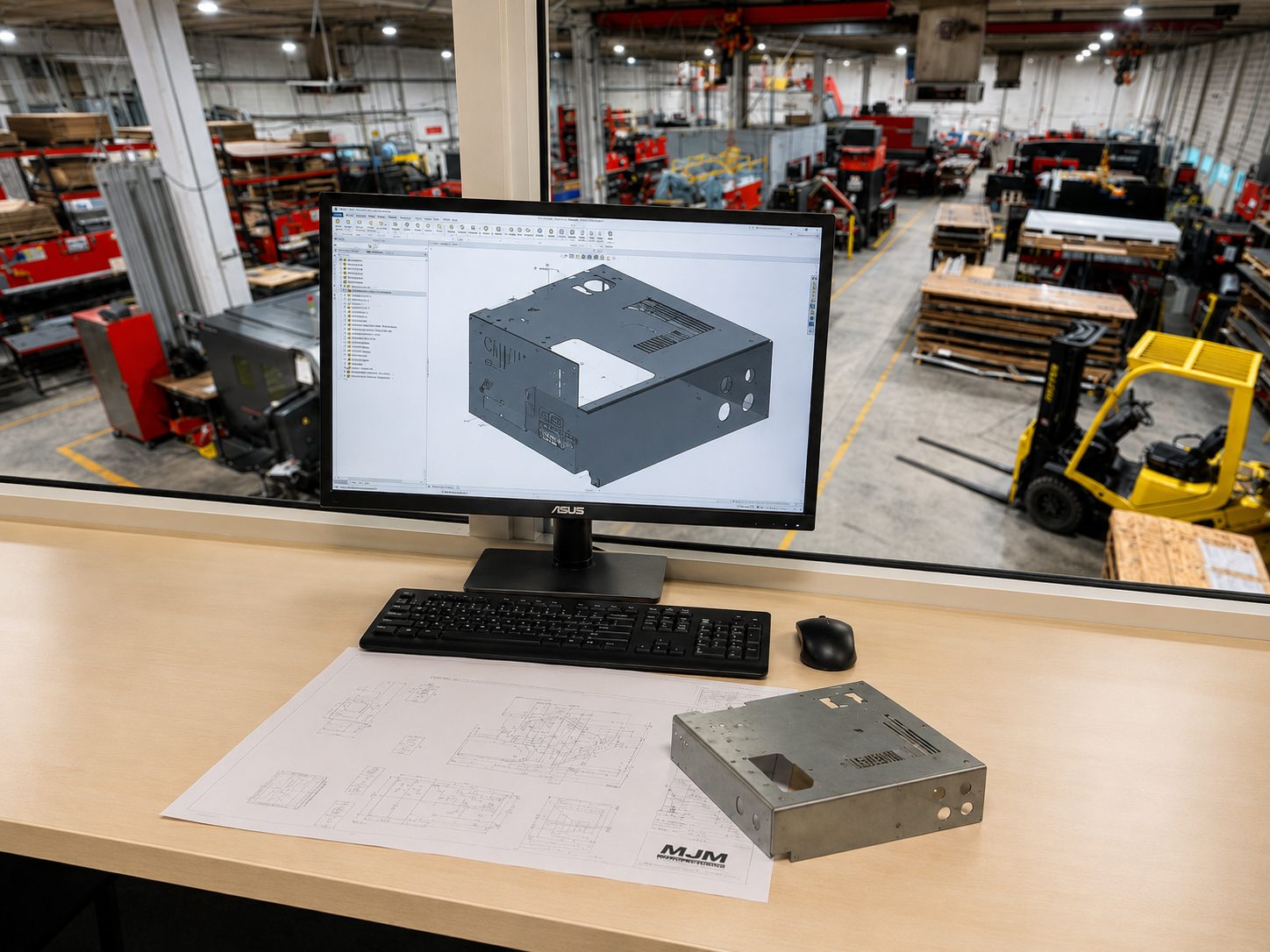
MJM Manufacturing engineer reviewing a sheet metal part drawing for design for manufacturability

MJM Manufacturing reviews part designs for manufacturability before production — flagging tolerance, forming, hardware, and finishing issues while they’re still inexpensive to change.

The earlier a design issue is caught, the cheaper it is to fix. A change in CAD costs minutes. The same change after tooling, first article, or a production run costs days — and a re-quote.

Mistake #1: Over-Tolerancing Every Dimension

Tight tolerances on every feature feel “safe,” but they add inspection time, scrap risk, and cost — often with no benefit to how the part actually functions. Tolerances should be tight only where form, fit, or function genuinely require it.

Our laser systems hold approximately ±0.005″, and forming holds about ±0.5° on bend angle and ±0.010″ on flange length. Designing to those realistic process capabilities — and reserving tighter callouts for the few features that truly need them — keeps parts producible and affordable. When critical dimensions do matter, we verify them with CMM, optical inspection, and full FAI reports.

Mistake #2: Holes, Slots, or Hardware Too Close to Bends

When holes, slots, or PEM hardware sit too close to a bend line, forming can distort or deform them — leading to rework, redesign, or out-of-spec parts. As a rule of thumb, keep holes at least 2–3 material thicknesses (plus the bend radius) away from the bend.

The same applies to pressed-in hardware. We install PEM fasteners and cage nuts on four Haeger presses, but they need adequate edge distance and clearance from bends to seat correctly. Flagging hardware locations early is one of the most common — and most preventable — DFM fixes we make.

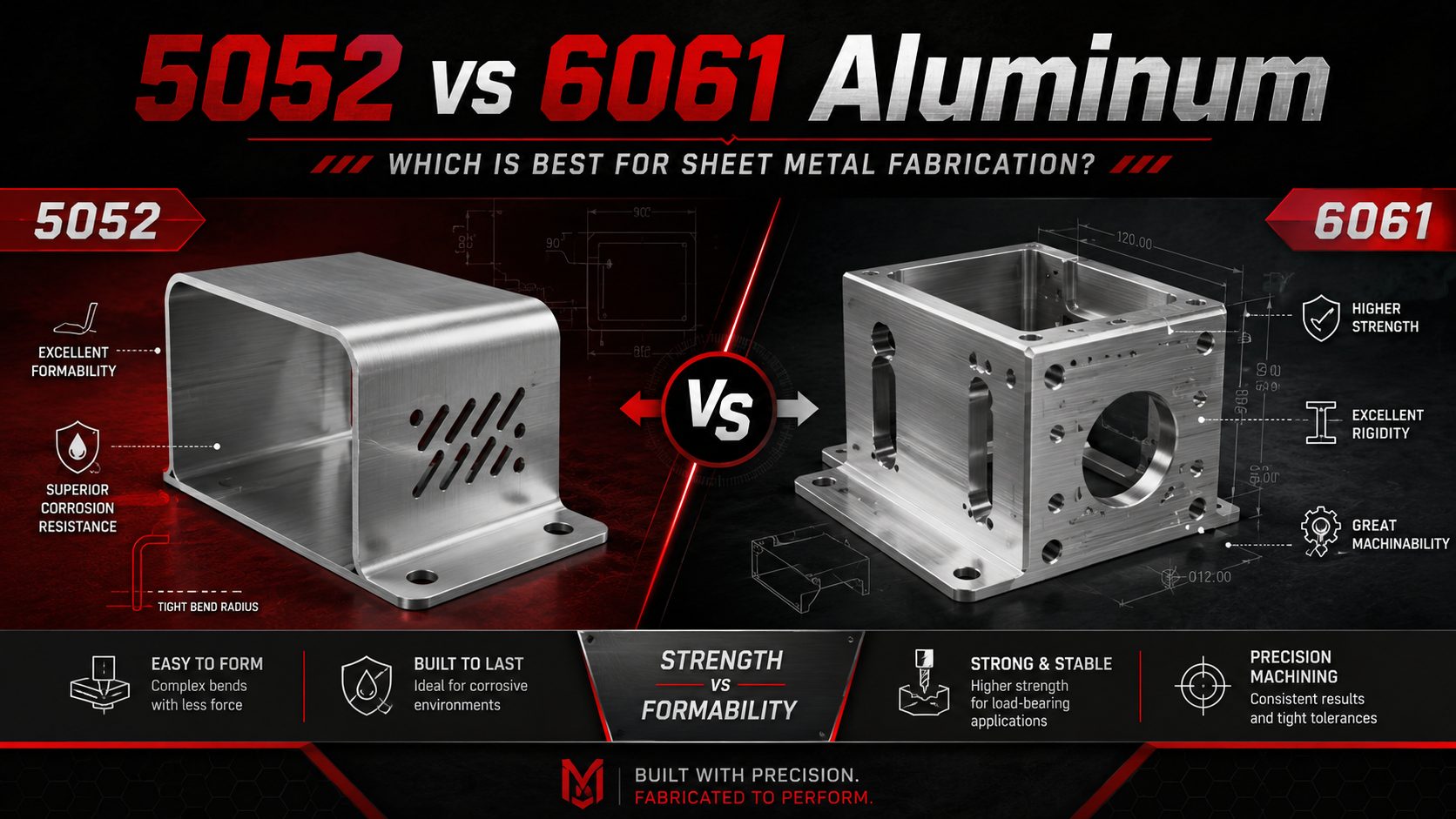
Mistake #3: Choosing Material Without Considering Forming, Welding, Finish, and Cost

Material isn’t just a strength decision — it drives how a part forms, welds, finishes, and prices out. A grade that looks ideal on a datasheet can crack at a tight bend, weld poorly, or carry a long lead time.

We routinely process aluminum, stainless steel, carbon steel, galvanized and galvanneal, copper, brass, titanium, and beryllium copper — plus non-metallics like polycarbonate, G-10/FR4, and Delrin. If you’re unsure which fits your forming, welding, and finishing requirements, that’s exactly the kind of trade-off we help weigh before you commit a drawing.

Mistake #4: Not Specifying the Final Finish Early

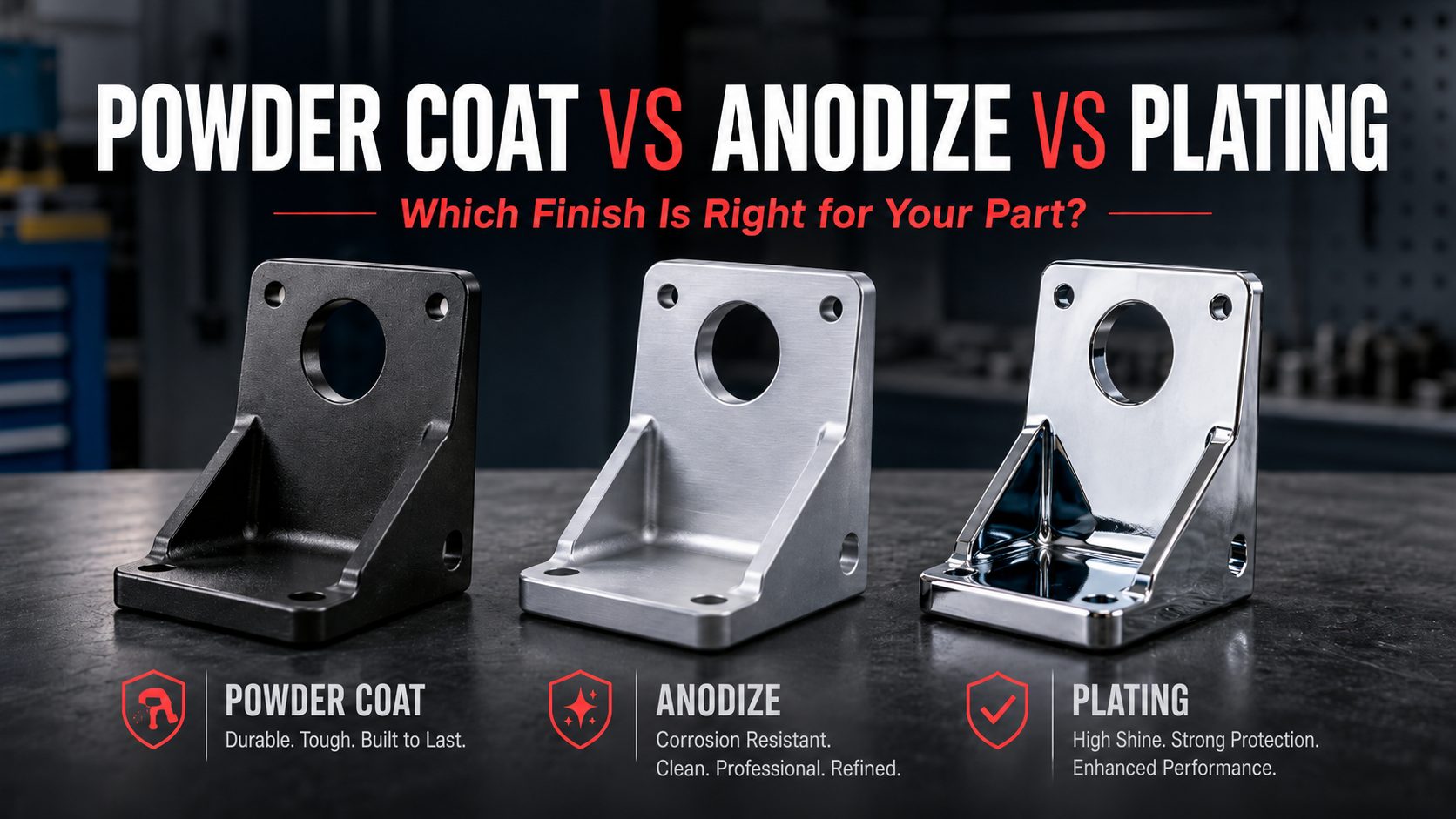
Finish is often treated as an afterthought, but powder coat, anodize, passivation, plating, grain direction, masking, and cosmetic requirements all influence how a part should be built — and sometimes how it’s cut and handled from the start.

For example, parts headed for a cosmetic finish benefit from clean, oxide-free nitrogen laser-cut edges and careful handling. Calling out the finish, masked areas, and any cosmetic “show” surfaces on the drawing prevents surprises — and avoids reworking parts that were technically in spec but cosmetically wrong.

Mistake #5: Sending Incomplete RFQs

Incomplete packages are the #1 cause of slow quotes. Every missing detail becomes a question, and every question adds a day. A complete RFQ lets us quote accurately the first time. Here’s the checklist we’d love to receive with every part:

2D drawing (PDF) with critical dimensions and notes
3D STEP file of the part
DXF flat if available
Material and thickness
Quantity and estimated annual volume
Finish or coating (and masked/cosmetic areas)
Critical tolerances only — called out where they matter
Welding notes and any weld-finish requirements
PEM / hardware callouts
Inspection or FAI requirements
Delivery date and application / use case

Mistake #6: Designing Parts That Require Unnecessary Secondary Operations

Every extra operation adds labor, handling, and lead time. Often a small design change removes one entirely — a formed feature replacing a welded bracket, a louver replacing a separate vent, or a repeating pattern that’s better suited to turret punching than individual laser hits.

Because we run laser cutting, CNC forming, welding, machining, hardware insertion, and finishing under one roof as part of our precision sheet metal fabrication services, we can see across the whole process and suggest where consolidating or eliminating an operation saves real money.

Mistake #7: Waiting Too Long to Involve the Fabricator

The single most expensive mistake is locking a design before anyone who has to build it weighs in. By then, the cost-saving opportunities — material, tolerances, hardware, finish, and process choices — are already baked in.

Send us the drawings early. With AS9100, ISO 9001, ITAR registration, and AWS D17.1 aerospace welding behind us, our team can review a design for manufacturability and flag cost, forming, welding, tolerance, and finishing issues while they’re still easy — and inexpensive — to change.

Get a Manufacturability Review Before You Release

Before you finalize your next sheet metal package, send MJM your drawings for a manufacturability review. We’ll help identify cost, forming, welding, tolerance, and finishing issues before they become expensive production problems. Email sales@mjmmfg.com or call (305) 620-2020.

Sheet Metal DFM — FAQ

What is design for manufacturability (DFM) in sheet metal?

DFM is reviewing a part’s design against how it will actually be cut, formed, welded, and finished — before production starts. The goal is to catch tolerance, bend, hardware, material, and finish issues early, when they cost minutes to fix instead of days. At MJM we offer DFM review as a standard part of our process.

How close can holes be to a bend in sheet metal?

A common guideline is to keep holes and slots at least 2–3 material thicknesses (plus the bend radius) away from the bend line. Too close, and forming can distort the feature. PEM hardware needs similar clearance from bends and edges to seat properly — something we flag during DFM review.

What files should I include in a sheet metal RFQ?

For the fastest, most accurate quote, include a 2D PDF drawing, a 3D STEP file, and a DXF flat if you have one — along with material and thickness, quantity, finish, critical tolerances, welding notes, hardware callouts, inspection/FAI requirements, and your delivery date. A complete package means fewer back-and-forth questions and a faster quote.

Why does over-tolerancing increase cost?

Tight tolerances on every dimension add inspection time, tooling demands, and scrap risk — even on features where the part would function fine with standard tolerances. Designing to realistic process capabilities (roughly ±0.005″ on our lasers) and reserving tight callouts for truly critical features keeps parts both producible and affordable.

When should I involve a fabricator in my design?

As early as possible — ideally before the design is locked. Once tolerances, material, hardware, and finish are fixed, most cost-saving opportunities are already gone. Sharing drawings early lets us suggest changes that reduce cost and lead time while they’re still easy to make.

Design for Manufacturability
Sheet Metal Design
RFQ Checklist
Cost Reduction
Precision Sheet Metal Fabrication

Laser Cutting & Manufacturing Technology · June 2026

Why Nitrogen Purity Matters in Precision Laser Cutting

When most engineers and buyers evaluate a laser cutting supplier, they focus on equipment, lead times, pricing, and certifications. One of the factors with the biggest impact on cut quality often goes unnoticed: the purity of the nitrogen assist gas.

At MJM Manufacturing, we’ve expanded our gas generation capabilities with a new advanced nitrogen generation system that produces nitrogen from industrial grades up to 99.9999% purity. That number sounds technical, but its impact on the parts you receive is real and visible.

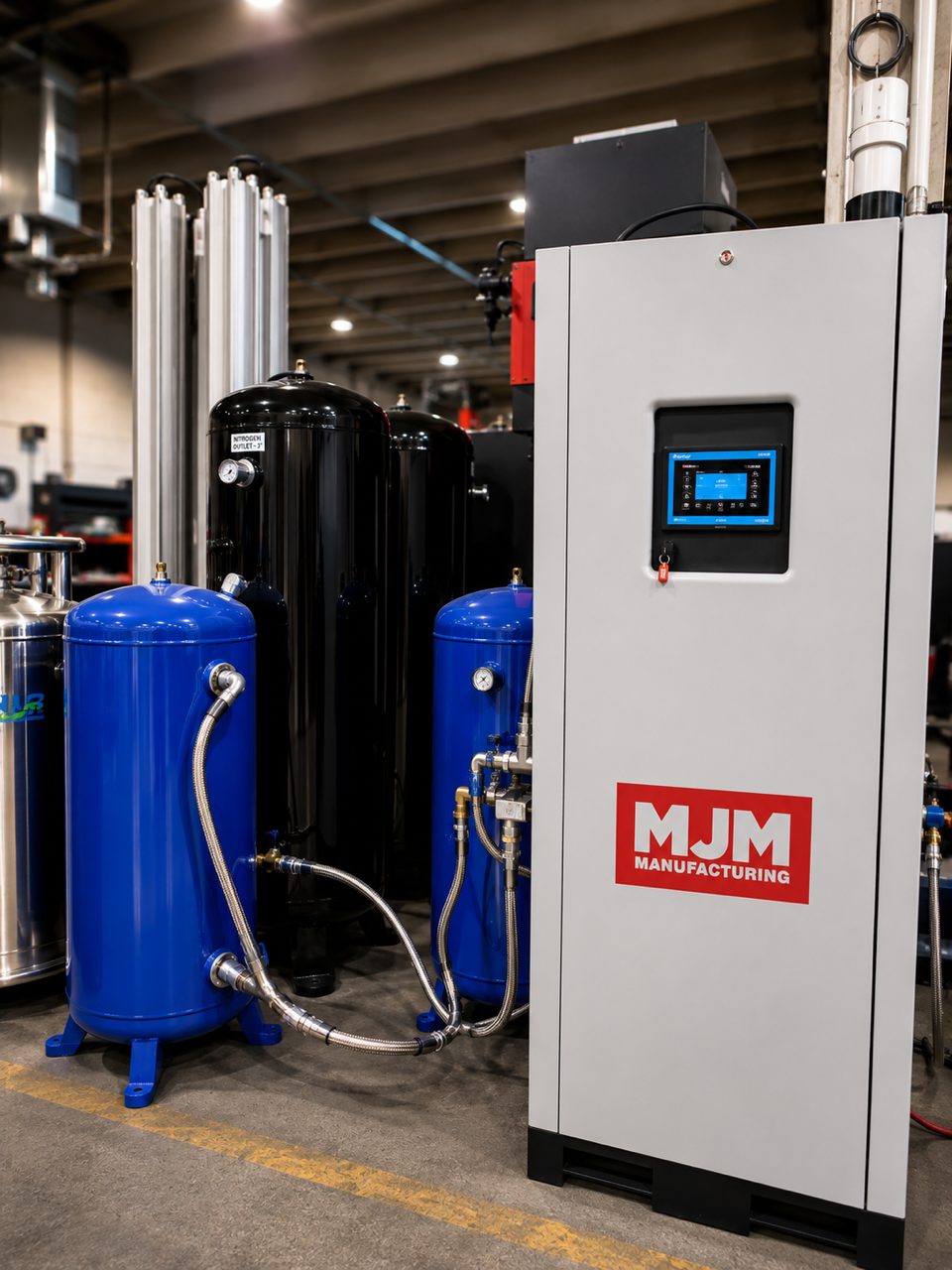
MJM Manufacturing nitrogen generation system for precision laser cutting services

MJM Manufacturing’s advanced nitrogen generation system supports cleaner laser-cut edges, improved weld preparation, and consistent part quality across our precision sheet metal fabrication operations.

The cleaner the nitrogen, the cleaner the cut.

What Nitrogen Does During Laser Cutting

Nitrogen is used as an assist gas when cutting stainless steel, aluminum, copper, brass, titanium, and other precision materials. Its job is to force molten metal out of the kerf while shielding the cut edge from oxygen.

Unlike oxygen-assisted cutting, which leaves an oxidized edge, nitrogen produces a bright, clean finish that is often ready for welding, assembly, powder coating, anodizing, or final use with minimal secondary processing.

Why Purity Levels Matter

Even small amounts of oxygen reaching the cut can affect edge quality, appearance, and downstream operations. Higher nitrogen purity reduces that oxidation, producing cleaner edges and greater part-to-part consistency.

For critical, cosmetic, and high-precision work, our system can generate nitrogen at up to 99.9999% purity — delivering exceptional results where appearance and surface integrity are part of the spec.

The Benefits Customers Actually See

Cleaner cut edges with reduced oxidation and discoloration
Improved cosmetic appearance on stainless steel and aluminum parts
Better weld preparation with less contamination at the joint
Reduced deburring and finishing requirements
More consistent quality across production runs
Improved downstream processing for powder coating, anodizing, and assembly

These advantages are especially important in aerospace, medical devices, robotics, energy, transportation, telecommunications, and defense, where precision and consistency are critical.

Supporting One of South Florida’s Most Advanced Laser Cutting Operations

Nitrogen quality is only part of the equation — the gas supply has to be paired with equipment capable of taking advantage of it.

MJM Manufacturing operates five Amada laser cutting systems — four fiber lasers and one CO2 laser — processing carbon steel, stainless steel, aluminum, copper, brass, and titanium across a wide range of thicknesses and production volumes.

Combined with our full range of precision sheet metal fabrication services — CNC forming, welding, machining, finishing, and assembly — advanced nitrogen generation helps ensure every part meets the quality standards our customers expect.

Investing in Better Parts

Most customers will never see the nitrogen system behind the scenes. What they do see are cleaner edges, better welds, improved finishes, and more consistent parts.

That’s why MJM Manufacturing continues to invest in the equipment, technology, and processes that improve quality at every stage of production. For a quote on your laser cutting project, contact us at sales@mjmmfg.com or call (305) 620-2020.

Nitrogen Laser Cutting — FAQ

Why use nitrogen instead of oxygen for laser cutting?

Oxygen-assisted cutting is faster on thick carbon steel, but it leaves an oxidized, discolored edge. Nitrogen shields the cut from oxygen, producing a bright, clean, oxide-free edge that’s ready for welding, coating, or assembly with minimal cleanup — ideal for stainless steel and aluminum.

What nitrogen purity does MJM use for laser cutting?

Our nitrogen generation system supplies purity from industrial grades up to 99.9999%. We match the purity to the material and application so cosmetic and high-precision parts get the cleanest possible cut.

Does higher nitrogen purity really improve cut quality?

Yes. Even small amounts of oxygen reaching the cut cause oxidation and discoloration on the edge. Higher-purity nitrogen reduces that contamination, giving cleaner edges, better cosmetic appearance, and more consistent results across a production run.

Which materials benefit most from nitrogen laser cutting?

Stainless steel and aluminum benefit the most, since both are sensitive to oxidation and are often used where appearance and corrosion resistance matter. Copper, brass, and titanium also see cleaner results with nitrogen assist.

Do nitrogen-cut parts still need deburring or finishing?

Often far less. Because nitrogen produces a clean, oxide-free edge, many parts move straight into welding, powder coating, anodizing, or assembly with minimal secondary work — which shortens lead times and lowers cost.

Laser Cutting
Nitrogen Generation
Fiber Laser Cutting
Precision Sheet Metal Fabrication
Manufacturing Technology

Sourcing & Cost · June 2026

Freight Isn’t the Whole Story: Understanding Total Landed Cost in Sheet Metal Fabrication

If you’re a buyer or engineer sourcing precision sheet metal parts, you’ve probably ruled out a supplier because they were “too far away.” It’s an understandable instinct — a shipping line on a quote is easy to see and easy to compare. But freight is one of the smallest and most visible pieces of what a fabricated part actually costs, and judging a supplier by distance alone can lead you to pay more, not less.

The metric that matters is total landed cost — the all-in price of getting finished, inspected parts to your dock. Freight is part of that number, but so are labor, manufacturing overhead, equipment efficiency, material utilization, and how much capacity a shop has to keep your job moving. On most projects, those factors swing the final price far more than shipping does.

Labor Is the Hidden Driver

Precision sheet metal work is labor-intensive in ways that don’t show up as a separate line on a quote. CNC laser operators, press brake operators, TIG and MIG welders, CNC machinists, programmers, assembly technicians, and quality inspectors all contribute to the hours behind every part — and a shop’s hourly rate quietly absorbs all of it. Where that shop is located has a direct, structural effect on those rates.

High-cost regions like California and the Northeast carry higher wages, higher workers’ compensation costs, higher facility and energy expenses, heavier regulatory overhead, and — in California’s case — the highest state income tax in the country. Every one of those costs gets built into the shop rate a customer ultimately pays. Florida, by contrast, is one of the most competitive manufacturing environments in the United States, with no state income tax and a lower overall cost base. That gap is real, it’s structural, and on a medium-to-large fabrication run it frequently outweighs the cost of shipping parts across the country.

Why So Many Out-of-State OEMs Source From Florida

This is exactly why a growing number of California, Texas, and Northeast OEMs source precision fabrication from Florida and the Southeast. Even with freight added to the quote, the total landed cost often comes out lower than a shop located much closer to them — and they don’t give up quality or speed to get there. A lower regional cost base, combined with high-capacity automation and an efficient, experienced workforce, can more than offset the miles.

It’s worth saying plainly: lower cost does not mean lower quality. At MJM, competitive pricing comes alongside AS9100 certification, ITAR registration, AWS D17.1 aerospace welding with Lockheed Martin program approval, and automated optical inspection. Florida’s cost advantage is about where the work is done — not how well.

What to Compare When You Evaluate a Quote

Next time you’re weighing fabrication suppliers, look past the freight line and compare the things that actually move total cost:

Per-part and tooling price — which reflects the shop’s true labor and overhead
Capacity and lead time — a backed-up shop costs you in delays, not just dollars
Single-source capability — fabrication, welding, machining, and finishing under one roof avoids the markup and risk of multiple vendors
Quality and documentation — certifications, inspection, and traceability that prevent costly rejects and rework
Then add freight — and compare the all-in landed cost, not the shipping line in isolation

When you run that comparison honestly, the “closer” shop isn’t always the cheaper one. MJM Manufacturing has shipped finished parts to customers across the country from our 44,000 sq ft Miami facility for over 47 years, with five Amada laser systems and full in-house fabrication keeping both cost and lead times competitive.

Before you assume the nearest supplier is the most cost-effective one, let us quote it. Send your drawings to sales@mjmmfg.com or call (305) 620-2020, and we’ll give you an all-in number so you can compare total landed cost — not just freight.

Total Landed Cost
Sourcing
Made in USA
Florida

Equipment Investment · May 2026

MJM Expands to Five Amada Laser Cutting Systems — One of the Largest Laser Fleets in South Florida

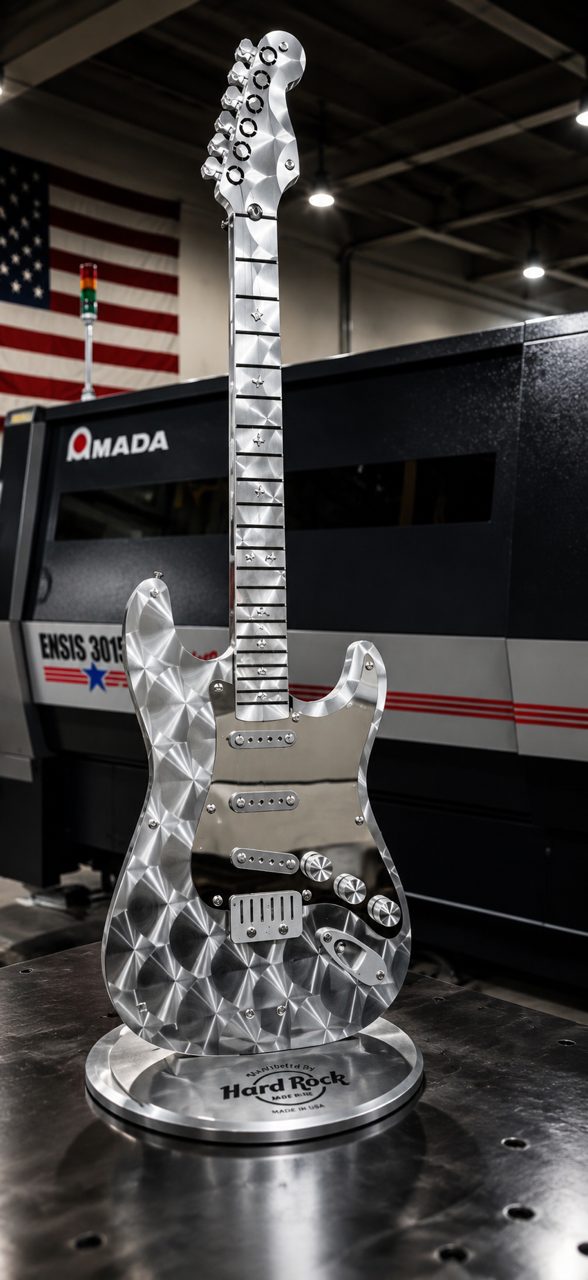
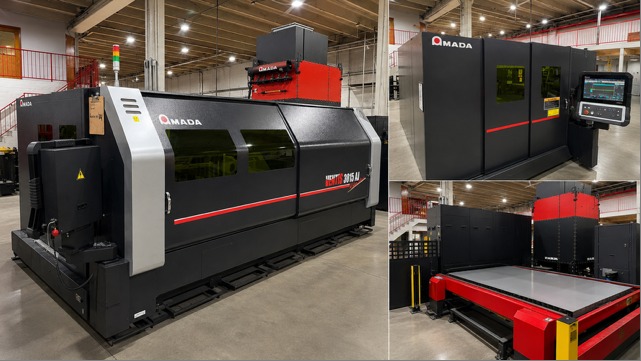
MJM Manufacturing is proud to announce that our laser cutting department now operates five Amada laser cutting systems — four fiber lasers and one CO2 laser — making us one of the highest-capacity laser cutting operations in South Florida.

Our fiber laser fleet consists of one Amada Ventis 3015 AJ (4kW with Locus Beam Control technology) and three Amada Ensis 3015 AJ (3kW with variable beam technology). Our CO2 system is the Amada LC 2415 A III, maintained for specific material and application requirements. All five machines run on a 5′ x 10′ cutting table and are supported by three CSD 75T Sigma nitrogen generation systems that supply clean nitrogen assist gas for oxide-free cut edges on stainless steel and aluminum.

The Amada Ensis systems feature variable beam control technology — automatically adjusting beam parameters for optimal cutting performance across thin gauge to thick plate in a single machine setup. The Ventis system features Amada’s patented Locus Beam Control (LBC), which allows the 4kW machine to perform at the level of traditional 6kW fiber laser systems while consuming less energy.

With five laser systems running simultaneously, MJM has the production capacity to support aerospace, defense, robotics, data center, OEM, and architectural customers with short lead times even on high-volume orders. Our laser cutting systems can cut mild steel and hot roll steel up to 1″, aluminum up to 0.625″, stainless steel up to 0.625″, copper up to 0.375″, and brass up to 0.375″.

All laser cutting operations at MJM are performed under our AS9100 certified and ITAR registered quality management system. For a quote on your laser cutting project, contact us at sales@mjmmfg.com or call (305) 620-2020.

Laser Cutting
Equipment
Amada
Miami

Equipment Investment · May 2026

MJM Welding Department Now Operates Nine IPG 2kW Fiber Laser Welders

MJM Manufacturing’s welding department has expanded to nine IPG 2kW fiber laser welding systems — one of the largest concentrations of laser welding capacity at any precision sheet metal fabricator in Florida.

IPG fiber laser welders produce high-quality, precision welds with significantly less heat input than traditional TIG or MIG welding. This means less distortion on thin gauge materials, cleaner cosmetic welds, and faster cycle times on production welding applications. For aerospace and electronics assemblies where heat distortion is a critical concern, fiber laser welding delivers results that traditional arc welding processes cannot match.

MJM’s welding department also includes three Sciaky three-phase resistance spot welders (75 KVA, 100 KVA, and 200 KVA) for sheet metal assembly joining, along with certified TIG and MIG welding stations for structural and production fabrication.

All welding operations are performed under our AS9100 certified and ITAR registered quality management system. Contact us at sales@mjmmfg.com to discuss your welding requirements.

Welding
IPG Laser Welding
Equipment
Aerospace

Certification · Quality · Defense

MJM Holds AWS D17.1 Aerospace Welding Certification with Lockheed Martin Program Approval

MJM Manufacturing holds AWS D17.1 aerospace fusion welding certification with Lockheed Martin program approval — one of the most demanding welding qualifications in the aerospace manufacturing industry, and a credential that very few sheet metal fabricators in the United States can claim.

AWS D17.1 is the American Welding Society standard specifically written for aerospace fusion welding. It covers the qualification of welding procedures and welders for aerospace structures, components, and assemblies — with significantly more stringent requirements than general structural welding codes. Achieving Lockheed Martin program approval under AWS D17.1 means that MJM’s welding procedures, welder qualifications, and quality documentation have been reviewed and approved by one of the most demanding aerospace prime contractors in the world.

Our welding department is backed by an extensive set of AWS certifications including D1.1 (Steel), D1.2 (Aluminum), D9.1M (Sheet Metal), and D17.1 (Aerospace Fusion Welding). MJM holds Lockheed Martin program approval under AWS D17.1 and Lloyd’s Register welding certification (LR 33932) — two of the most demanding welding qualifications in the aerospace and defense industry.

MJM Manufacturing is also fully registered for government defense contracting. Our CAGE Code is 0YLX1 and we are registered on SAM.gov — the two credentials required for U.S. Department of Defense supplier qualification and prime contractor approved vendor lists. Combined with our ITAR registration, AS9100 certification, and AWS D17.1 aerospace welding approval, MJM meets the compliance requirements of the most demanding defense procurement programs.

In addition to AWS D17.1, MJM holds certifications to AWS D1.1 (Structural Welding — Steel), AWS D1.2 (Structural Welding — Aluminum), and AWS D9.1M (Sheet Metal Welding Code), supported by qualified Weld Procedure Specifications (WPS) and Procedure Qualification Records (PQR). MJM also holds Lloyd’s Register welding certification (LR 33932) — a globally recognized third-party welding quality approval used in aerospace, marine, and defense programs.

For aerospace and defense customers requiring welding quality documentation, MJM can provide WPS, PQR, welder performance qualification records, weld maps, and in-process inspection documentation as required by your program quality plan. Contact us at sales@mjmmfg.com or call (305) 620-2020.

AWS D17.1
Aerospace Welding
Lockheed Martin
Defense
ITAR

Equipment Investment · Quality · Inspection

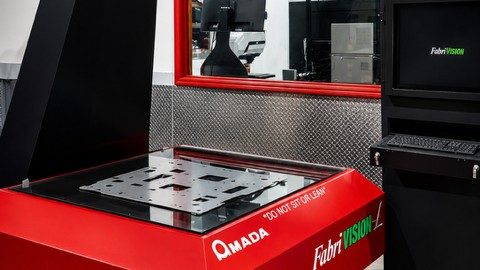
MJM Adds Amada Fabri-Vision Automated Optical Inspection System

MJM Manufacturing has added the Amada Fabri-Vision automated optical inspection system to our quality control department — significantly expanding our dimensional inspection capability for laser cut and CNC punched parts.

The Fabri-Vision uses 24 cameras to scan parts and compare them against CAD data, delivering full dimensional inspection reports in minutes rather than the hours required for manual measurement. Traditional manual inspection requires a technician to measure individual features one at a time with calipers and gauges. The Fabri-Vision scans the entire part simultaneously — capturing all features, holes, slots, and edges in a single automated pass and flagging any out-of-tolerance conditions immediately.

For our aerospace and defense customers, the Fabri-Vision provides the inspection documentation required for first article inspection (FAI) reports and in-process quality records. Every scanned part generates a printed dimensional report that can be archived as part of the part traveler and quality documentation package.

MJM’s inspection department also includes the Keyence LM-X Series non-contact optical measurement system and the Keyence XM-5000 handheld probe coordinate measuring machine — giving us three independent dimensional inspection systems for complete coverage across all part types and sizes.

This investment in inspection technology reflects MJM’s commitment to zero-defect quality delivery across all programs. Contact us at sales@mjmmfg.com to discuss your inspection and quality documentation requirements.

Inspection
Amada Fabri-Vision
Quality
AS9100

Milestone · Company History · Made in USA

MJM Manufacturing Celebrates 47 Years of American Manufacturing in Miami, Florida

MJM Manufacturing is proud to celebrate 47 years of precision sheet metal fabrication in Miami, Florida — 47 years of keeping “Made in USA” alive, 47 years of serving the aerospace, defense, robotics, and industrial manufacturing industries, and 47 years of building long-term relationships with the customers who trust us with their most demanding programs.

MJM Manufacturing was founded in 1979 by Mike Mijares in a small two-car garage in Miami. From those humble beginnings, MJM has grown into a 44,000 square foot precision manufacturing facility with over 80 employees — many of whom have been with the company for 20, 30, and even 45+ years. That kind of institutional knowledge and craftsmanship cannot be replicated by a new shop with new equipment alone.

Over 47 years, MJM has fabricated components and assemblies for some of the most recognized aerospace, defense, and industrial companies in the world — Boeing, Lockheed Martin, Northrop Grumman, BAE Systems, L3 Harris, Bell Textron, Honeywell, IBM, Motorola, Beckman Coulter, Johnson Controls, and many more. The fact that so many of these customers have stayed with MJM for decades is the strongest testament to our quality, reliability, and service.

Today MJM operates one of the most advanced precision sheet metal fabrication equipment lineups in South Florida — five Amada laser cutting systems, nine IPG fiber laser welders, nine Amada forming machines, three Knuth rollers, a Mazak CNC machining center, and an Amada Fabri-Vision automated optical inspection system. We hold 17 independent certifications including AS9100, ISO 9001, ITAR registration, DBE certification, AWS D17.1 aerospace welding with Lockheed Martin program approval, and Lloyd’s Register welding certification.

As we enter our 48th year, MJM Manufacturing remains committed to the same values that Mike Mijares built this company on — precision, reliability, and an unwavering commitment to American manufacturing. Thank you to every customer, employee, and supplier who has been part of this journey. Contact us at sales@mjmmfg.com or call (305) 620-2020 to discuss your next project.

47 Years
Made in USA
Miami
History
Aerospace

Ready to Work With MJM?

47 years of precision. 80+ employees. 44,000 sq ft. Get a quote within 24–48 hours at sales@mjmmfg.com.

MJM Manufacturing, Inc.  |  AS9100 Certified  |  ISO 9001 Certified  |  ITAR Registered  |  DBE Certified  |  AWS D17.1 Aerospace Welding  |  Lloyd’s Register LR 33932  |  5205 NW 161 Street, Miami, FL 33014  |  (305) 620-2020