News & Updates from MJM Manufacturing
MJM News
Equipment investments, certifications, milestones, and updates from Miami’s premier precision sheet metal fabrication facility.
Sourcing & Supplier Selection · July 2026
How to Choose a Sheet Metal Fabrication Supplier: A Buyer’s Checklist
Choosing a sheet metal fabrication supplier is one of the highest-leverage decisions an engineer or buyer makes. The right partner delivers accurate quotes, on-time parts, and consistent quality run after run. The wrong one costs you in missed deadlines, rejected parts, re-quotes, and the hidden expense of managing a supplier who can’t keep up.
After 47 years of fabricating precision sheet metal parts for industrial, OEM, data center, medical, aerospace, and defense customers, we’ve been evaluated by some of the most demanding buyers in the world — and we’ve seen what separates a supplier you can build a program around from one you’ll be replacing in six months. Here’s a practical checklist of what to look for before you award your next fabrication job.
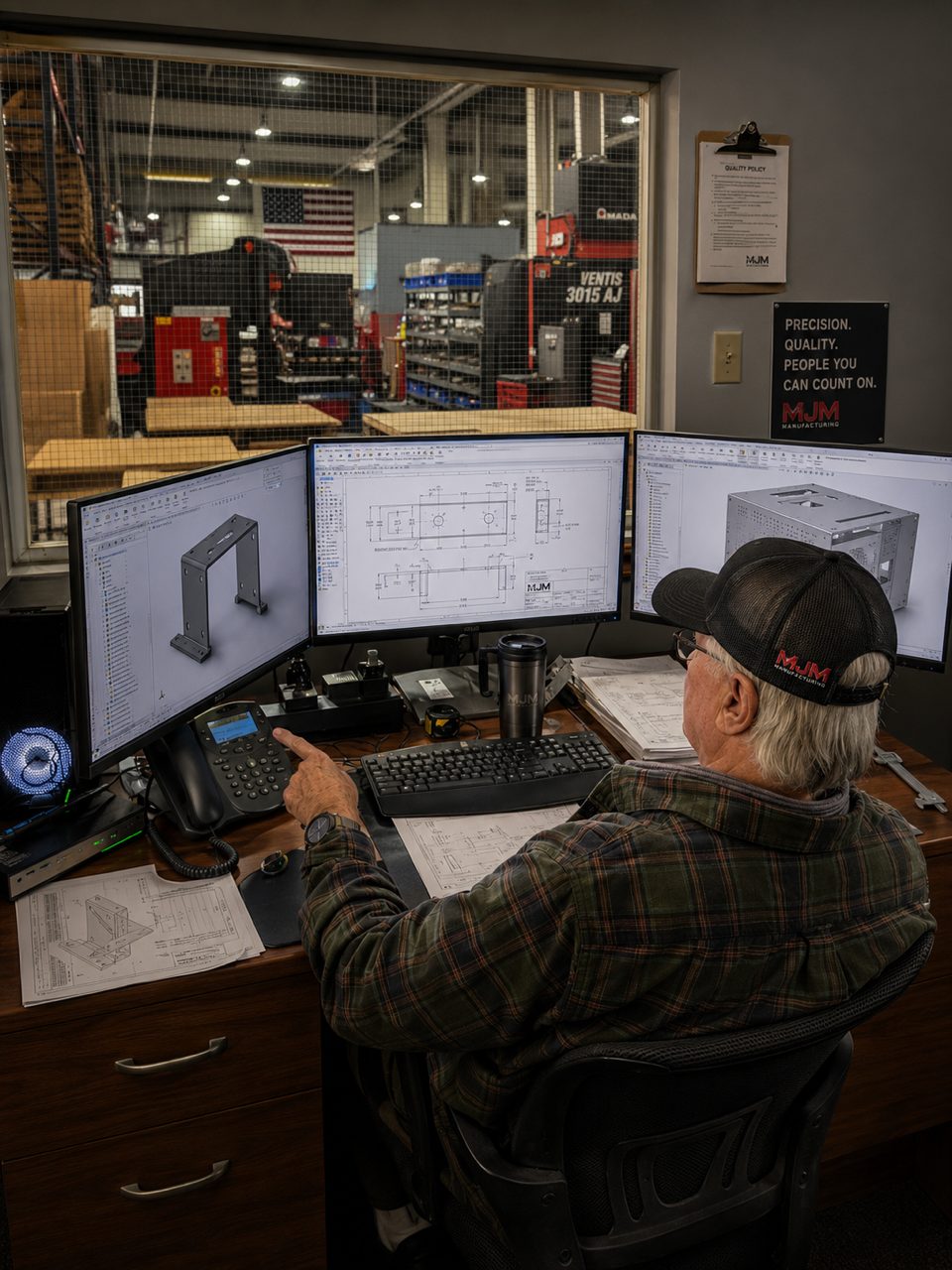
The best time to evaluate a supplier is before you need them — not in the middle of a program when a deadline is already at risk.
The right supplier is a long-term asset, not just a line on a quote. A shop that quotes accurately, communicates clearly, and delivers in spec pays you back on every job — while a “cheap” supplier who ships late and out of tolerance costs you far more than the savings.
1. Match Their Capabilities to Your Actual Parts
Not every fabricator does every process well. Before anything else, confirm the supplier can handle the specific work your parts require — laser cutting, CNC forming, welding, hardware insertion, machining, and finishing — in the materials and thicknesses you use. A shop built around thin-gauge enclosures may not be right for heavy plate work, and vice versa.
Look for a fabricator with genuine in-house capability across the full process. When cutting, forming, welding, and finishing happen under one roof, you get one point of accountability instead of a chain of vendors each adding markup, lead time, and risk.
2. Verify Certifications — and That They Match Your Requirements
Certifications tell you a supplier’s quality system has been independently audited and holds up. But the right certifications depend on your industry. For most OEM, industrial, and commercial work, ISO 9001 signals a mature quality management system. For aerospace and defense, AS9100 and ITAR registration matter. For welded assemblies, look for the relevant AWS welding certifications.
Ask for current certificates, not expired ones, and confirm the scope covers the work you’re placing. At MJM, we hold 17 independent certifications including AS9100, ISO 9001, and ITAR registration — but the point isn’t the number, it’s that the credentials line up with what your parts actually demand.
3. Assess Capacity and Lead Time Honestly
A shop can have the right equipment and still be the wrong choice if it’s already running at capacity. A backed-up supplier costs you in delays that don’t show up on the quote. Ask how many machines they run, whether they can run your job on more than one, and what their realistic lead times look like — not just the best-case number.
Capacity also protects you when a program scales or a rush order lands. A fabricator running multiple laser systems and forming machines can keep your parts moving even under load, where a single-machine shop bottlenecks the moment its one laser goes down.
4. Look at How They Handle Quoting and DFM
The quoting process tells you a lot about how a supplier will treat your program. A good fabricator reviews your drawings, asks questions, and flags design-for-manufacturability issues before they become expensive — not after the first article fails. A supplier who quotes fast but silently builds exactly what’s on the print, problems and all, will cost you more in the long run.
Responsiveness matters too. If it takes a week to get a quote before you’re even a customer, that’s a preview of how communication will go once you are.
5. Understand Their Quality and Inspection Process
Quality isn’t a certificate on the wall — it’s what happens on the floor. Ask how parts are inspected: first-article inspection, in-process checks, and final inspection. Ask what measurement equipment they use — CMM, optical inspection, automated scanning — and whether they can provide the documentation your program requires, such as FAI reports, material certifications, and traceability.
A supplier who can produce clean inspection documentation on request is one who’s confident in their process. One who can’t is a risk you’ll eventually pay for in rejected parts.
6. Confirm Traceability and Documentation
For any serious program, you need to know that the material in your parts is what the drawing called for, and that it can be traced back to its certifications. Ask how the supplier handles material traceability, job tracking, and record-keeping. A shop that tracks each job through production — and can tell you exactly where your parts are at any point — is one that won’t lose your order or ship the wrong material.
7. Weigh Total Landed Cost, Not Just Price
The lowest per-part price isn’t always the lowest total cost. Total landed cost includes freight, yes — but also the cost of rejects, rework, delays, and managing a supplier who needs constant follow-up. A slightly higher quote from a supplier who delivers on time, in spec, with clean documentation, is almost always cheaper than a “bargain” that ships late and out of tolerance.
It’s also worth looking past geography. A supplier a few states away with a lower regional cost base, higher capacity, and better quality can deliver a lower all-in cost than the shop down the road — even with freight added.
8. Consider Stability and Track Record
Finally, consider who you’re actually building a relationship with. How long has the supplier been in business? Do they have long-tenured employees who carry real institutional knowledge, or high turnover? Have they held customers for years, or do they churn through them? A fabricator with decades of history and customers who’ve stayed for the long haul is telling you something a new shop with new equipment can’t.
Choose the MJM Difference
MJM Manufacturing has been the answer to this checklist for over 47 years — full in-house fabrication under one roof, 17 certifications including AS9100 and ISO 9001, high-capacity laser and forming equipment, automated inspection, complete traceability, and a family-run track record built on customers who’ve stayed with us for decades. Send us your drawings and see the difference for yourself. Email sales@mjmmfg.com or call (305) 620-2020.
Choosing a Fabrication Supplier — FAQ
What should I look for in a sheet metal fabrication supplier?
Start by matching their capabilities to your actual parts — the right processes, materials, and thicknesses. Then verify certifications that fit your industry, assess real capacity and lead times, evaluate how they quote and handle DFM, and confirm their quality, inspection, and traceability process. Finally, weigh total landed cost rather than per-part price alone, and consider the supplier’s stability and track record.
What certifications should a sheet metal fabricator have?
It depends on your industry. ISO 9001 signals a mature quality management system for most OEM and industrial work. Aerospace and defense typically require AS9100 and ITAR registration, and welded assemblies call for the relevant AWS welding certifications. Always confirm the certificates are current and that their scope covers the work you’re placing.
Is the cheapest fabrication quote the best choice?
Not usually. The lowest per-part price can hide higher total costs from rejects, rework, delays, and heavy supplier management. Total landed cost — including quality, on-time delivery, documentation, and freight — is the number that matters. A reliable supplier at a slightly higher price often costs less overall than a cheap one that ships late or out of spec.
Why does single-source fabrication matter?
When cutting, forming, welding, machining, and finishing all happen under one roof, you deal with one point of accountability instead of coordinating multiple vendors. That reduces markup, lead time, handoff errors, and the risk of parts getting lost between shops — and it makes quality and traceability easier to maintain across the whole part.
How important is a fabricator’s capacity?
Very. A shop with the right equipment can still be the wrong choice if it’s already maxed out. Adequate capacity — multiple machines that can run your job — protects your lead times when programs scale or rush orders land, and keeps your parts moving even if one machine goes down.
Sourcing
Fabrication Buyer’s Guide
Precision Sheet Metal Fabrication
Made in USA
Ready to Work With MJM?
47 years of precision. 80+ employees. 44,000 sq ft. Get a quote within 24–48 hours at sales@mjmmfg.com.
MJM Manufacturing, Inc. | AS9100 Certified | ISO 9001 Certified | ITAR Registered | DBE Certified | AWS D17.1 Aerospace Welding | Lloyd’s Register LR 33932 | 5205 NW 161 Street, Miami Gardens, FL 33014 | (305) 620-2020